How Stress Destroys Your Sex Life - And What to Do About It (2026 Guide)
sexualdoctors Team
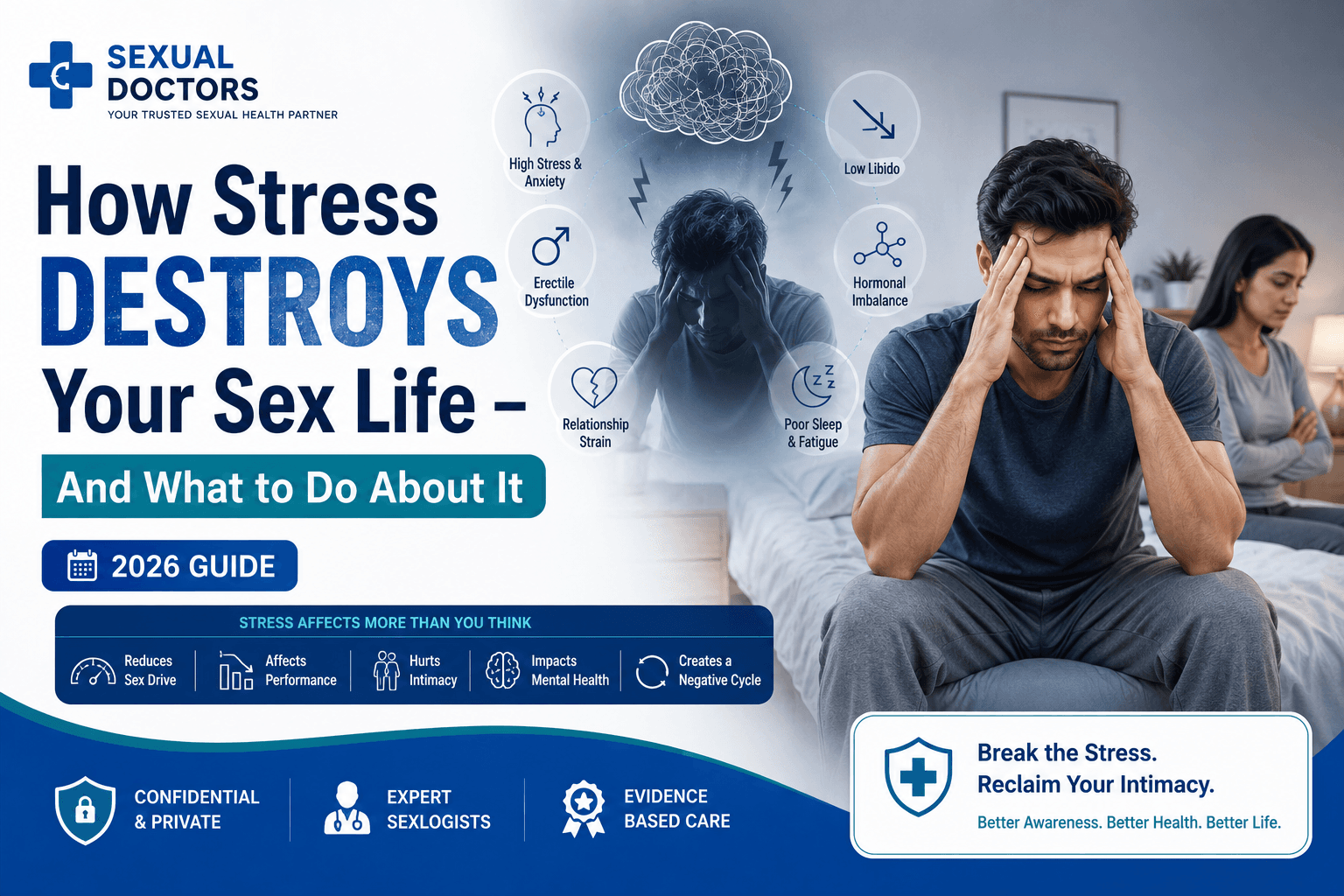
You've had a brutal week. Deadlines, arguments, unpaid bills, a commute that felt like a punishment. By the time you're finally in bed with your partner, the last thing your body wants to cooperate with is intimacy.
And yet you feel guilty about it. Maybe your partner does too.
Here's the thing nobody tells you clearly enough: stress is one of the most potent enemies of sexual health that exists. It doesn't just make you "not in the mood." It chemically dismantles the hormones, nerve signals, and blood flow that sexual function depends on. It rewires the brain away from desire and toward survival. And when it becomes chronic weeks, months, years of sustained pressure — the damage to your sex life can be deep, compounding, and easy to mistake for something else entirely.
This guide explains exactly how stress does this, what the science says, and most importantly what actually works to reverse it.
The Biology First: What Stress Actually Does to Your Body
To understand why stress wrecks your sex life, you need to understand what stress does to your body at a biological level.
When you perceive a threat whether it's a lion on the savanna or a 9 AM performance review your brain triggers the fight-or-flight response. The hypothalamus signals the adrenal glands to flood your body with two stress hormones: adrenaline and cortisol.
This response is brilliant for short-term survival. It raises your heart rate, sharpens your focus, increases blood glucose for fast energy, and prepares your muscles to fight or flee.
But it does something else too something critical for sexual health:
It shuts down everything the body considers non-essential for immediate survival.
Digestion slows. Immune function is suppressed. And most relevantly the reproductive and sexual systems are deprioritised. When your brain believes you're in danger, sex is the last thing on the biological agenda.
For a single stressful afternoon, this is fine. The cortisol clears, the system resets, and desire returns.
The problem is chronic stress when the threat never fully disappears. When work pressure, financial anxiety, relationship tension, or health worries keep your cortisol levels elevated day after day, week after week. At that point, what was a temporary biological response becomes a sustained physiological state and the consequences for your sexual health are serious.
How Chronic Stress Destroys Sexual Health - 6 Mechanisms
1. Cortisol Suppresses Testosterone (And Oestrogen)
This is the most direct and well-documented pathway between stress and sexual dysfunction.
Cortisol and testosterone are biochemically antagonistic. When cortisol rises as it does under chronic stress it actively suppresses the production of testosterone in men and disrupts oestrogen balance in women. Both of these sex hormones are foundational to sexual desire, arousal, and performance.
When men and women are exposed to chronic stress, the cortisol hormone is released and affects testosterone and oestrogen levels which can have a detrimental impact on libido.
In men, this hormonal suppression can manifest as:
-
Significantly reduced sex drive (low libido)
-
Difficulty achieving or maintaining erections
-
Reduced sperm quality and count (relevant to couples trying to conceive)
-
General fatigue and low motivation that bleeds into sexual energy
In women, the hormonal disruption can cause:
-
Loss of interest in sex that feels inexplicable
-
Reduced vaginal lubrication (leading to uncomfortable or painful sex)
-
Difficulty reaching arousal or orgasm
-
Mood changes that affect emotional intimacy with a partner
2. Stress Directly Triggers Erectile Dysfunction
The hypothalamic-pituitary-adrenal (HPA) axis functions to help us cope with continuous stress. Its activation causes an increase in cortisol, which elevates blood sugar and blood pressure and suppresses immunity and cortisol also suppresses testosterone, the key male sex hormone responsible for sex drive and the blood flow alterations that result in an erection.
Studies reveal that about 10–20% of erectile dysfunction cases are tied to psychological causes like performance anxiety. Nearly 90% of young men suffering from chronic anxiety may struggle with ED at some point.
The particularly cruel part of stress-related erectile dysfunction is the feedback loop it creates. The man experiences a stress-induced erection problem, becomes anxious about it happening again, and that very anxiety which is itself a stress response makes the next erection problem more likely. Over weeks and months, this cycle can transform an occasional stress-related difficulty into an established pattern of erectile dysfunction.
3. Stress Causes - Premature Ejaculation
The relationship between stress, anxiety, and premature ejaculation is equally well established, though less commonly discussed.
The autonomic nervous system governs ejaculation. Under stress and anxiety, the sympathetic nervous system (the "fight-or-flight" branch) is chronically overactivated. This heightened sympathetic tone lowers the ejaculatory threshold meaning it takes less stimulation to trigger ejaculation.
Performance anxiety compounds this further. A man who is anxious about ejaculating quickly is, by definition, operating in a heightened state of sympathetic activation during sex — which is precisely the physiological condition that causes fast ejaculation. The worry itself accelerates the thing being worried about.
Stress can lead to erectile dysfunction, reduced libido, delayed ejaculation, or premature ejaculation and it creates performance anxiety that worsens over time if not addressed.
4. Stress Kills Desire by Hijacking the Brain's Priority System
Stress can significantly dampen sexual desire or libido. When you're constantly under pressure, your body prioritises survival mechanisms over other functions, including sexual desire.
The prefrontal cortex, the part of the brain responsible for pleasure, anticipation, and emotional connection, is suppressed under chronic stress. Meanwhile, the amygdala (the threat-detection centre) is hyperactive. From a neurological standpoint, a chronically stressed brain is literally less capable of experiencing or anticipating sexual pleasure.
This is why low libido under stress isn't just "not being in the mood" — it's a measurable neurological and hormonal state. When the nervous system is in survival mode, sex is the last thing it prioritises. Desire requires a sense of safety, presence, and energy — all of which chronic stress actively depletes.
5. Stress Creates Emotional Distance Between Partners
Sexual intimacy doesn't exist in isolation from emotional intimacy. When one or both partners are chronically stressed, the emotional fabric of the relationship frays in ways that directly impact sexual connection:
-
Communication becomes transactional schedules, logistics, responsibilities rather than warm and connective
-
Patience thins; small irritations become larger conflicts
-
Touch and physical affection decrease the "gateway" to sexual desire for many people, particularly women
-
One partner may withdraw emotionally to cope with stress, which the other reads as rejection or distance
Over time, this emotional erosion makes sexual intimacy feel awkward, forced, or entirely absent — even when both partners still genuinely care about each other. This is where relationship counselling becomes essential, not just individual treatment.
6. Stress Disrupts Sleep
This mechanism is often overlooked, but it's critically important.
Chronic stress impairs sleep quality either through difficulty falling asleep (racing thoughts), disrupted sleep cycles, or early waking. And poor sleep is independently devastating for sexual health:
-
Testosterone is primarily produced during deep sleep. Even one week of sleep deprivation (under 5 hours per night) has been shown to reduce testosterone levels by 10–15% in young men.
-
Poor sleep elevates cortisol — creating a vicious cycle where stress disrupts sleep, disrupted sleep raises cortisol, and raised cortisol further suppresses testosterone.
-
Fatigue directly reduces both the desire and the energy for sexual activity.
-
Sleep deprivation impairs emotional regulation — making conflicts more likely and emotional intimacy harder to maintain.
If your sex life has suffered and your sleep has too, these two facts are almost certainly connected.
The Stress–Sex Life Spiral: How It Compounds Over Time
Understanding the individual mechanisms is important. But what makes chronic stress particularly destructive is how these mechanisms interact and reinforce each other over time:
Month 1–2: Chronic stress begins. Cortisol rises, testosterone drops. Libido decreases noticeably. Sleep worsens. Both partners feel the shift but don't yet connect it clearly to stress.
Month 3–4: Erection difficulties appear occasionally, or premature ejaculation worsens. Performance anxiety begins to develop. Sex starts feeling pressurised rather than pleasurable. One or both partners begin avoiding it.
Month 5–6: Avoidance becomes the pattern. Emotional distance grows. The partner who wants more intimacy feels rejected; the partner experiencing dysfunction feels ashamed and misunderstood. Relationship tension worsens — which, of course, creates more stress.
Month 7+: What began as a stress response has now become an established pattern of sexual dysfunction, relationship strain, and possibly depression or anxiety disorders. The original stressor may even have resolved — but the sexual and relational damage remains.
This spiral is why early intervention matters so much. The sooner stress-related sexual concerns are addressed with professional guidance, the less compound damage accumulates. Our certified sexologists see this pattern regularly — and the one consistent finding is that the people who recover fastest and most completely are those who sought help early rather than waiting for the situation to become a crisis.
Stress Affects Women Differently
Much of the public conversation about stress and sexual health centres on men — erectile dysfunction, premature ejaculation, performance anxiety. These are real and important. But stress-related sexual dysfunction in women is equally prevalent and considerably less discussed.
In women, chronic stress tends to manifest as:
Loss of desire that feels "unexplained" — Many women experiencing stress-related low libido attribute it to ageing, relationship issues, or a fundamental change in personality. The hormonal reality — cortisol suppressing oestrogen and testosterone — is rarely considered.
Reduced arousal and vaginal dryness — Stress activates the sympathetic nervous system (fight-or-flight), which directly inhibits vaginal lubrication and clitoral engorgement — both of which require parasympathetic (rest-and-digest) nervous system activation. Simply put: a stressed body cannot physically relax into arousal.
Difficulty reaching orgasm - The same nervous system competition applies here. Orgasm requires a complete shift to parasympathetic dominance — a state that chronic stress makes genuinely difficult to access. Women often describe this as "getting close but something blocking it" that something is often elevated cortisol and sympathetic overactivation.
Painful sex (dyspareunia) - Reduced lubrication combined with pelvic floor tension (a common stress response) can make intercourse physically uncomfortable. This in turn creates anticipatory anxiety about sex another feedback loop. Our vaginismus treatment page covers how stress-related pelvic tension is assessed and treated.
What to Do: Evidence-Based Solutions That Actually Work
Understanding the problem is one thing. Fixing it is another. Here are the approaches that have strong clinical evidence behind them — not generic wellness advice, but targeted interventions.
1. Address the Root Stress
This sounds obvious but is often skipped. If work is the primary stressor, managing sexual dysfunction without addressing the work situation is treating symptoms while the cause continues.
A certified psychosexual therapist can help identify which stressors are most impacting sexual health and develop a targeted plan including what to address medically, psychologically, and behaviourally.
2. Psychosexual Therapy and CBT
Cognitive Behavioural Therapy (CBT) has strong evidence for breaking the performance anxiety feedback loops that stress creates. A psychosexual therapist will:
-
Identify the specific thought patterns driving performance anxiety
-
Use structured techniques to gradually reduce the anxiety-arousal interference
-
Rebuild positive associations with sexual intimacy after periods of avoidance
-
Work with couples together when relationship dynamics are involved
This is available through SexualDoctors as part of a comprehensive sexual health consultation.
3. Mindfulness-Based Stress Reduction (MBSR)
Mindfulness, emotional communication, reducing performance pressure, getting enough sleep, and maintaining a healthy lifestyle all help manage sexual stress without medication.
Research specifically on mindfulness and sexual function is encouraging. Mindfulness practice even 10–15 minutes daily activates the parasympathetic nervous system, reduces cortisol, and trains the brain to stay present during sex rather than spiralling into performance anxiety. Apps, guided practices, and clinician-led mindfulness programmes are all accessible options.
4. Sleep Optimisation
Given how directly sleep impacts testosterone and cortisol, improving sleep quality is one of the highest-leverage interventions for stress-related sexual dysfunction:
-
7–9 hours per night is the target for hormonal restoration
-
Consistent sleep and wake times stabilise the cortisol rhythm
-
Avoiding screens for 60 minutes before bed significantly improves sleep quality
-
If stress-related insomnia is severe, a short course of sleep medication may be appropriate — discuss with your specialist
5. Physical Exercise - the Cortisol Regulator
Regular aerobic exercise is one of the most evidence-based interventions for reducing chronic cortisol levels. It also:
-
Increases testosterone in men
-
Improves cardiovascular health (directly improving erectile function)
-
Enhances mood through endorphin and dopamine release
-
Improves body image and sexual confidence
The optimal frequency is 3–5 sessions per week of moderate-intensity aerobic exercise (brisk walking, running, swimming, cycling). Even two sessions per week produce meaningful hormonal benefits.
6. Couples Communication and Intimacy Rebuilding
When stress has created emotional distance in a relationship, rebuilding intimacy often needs to be done deliberately and gradually — rather than jumping straight back to sex after a period of avoidance.
Strategies supported by psychosexual therapists include:
-
Sensate focus exercises — structured, non-performance-oriented touch exercises that rebuild physical comfort and intimacy without the pressure of sexual performance
-
Scheduled intimacy time — counterintuitive but effective; removing the spontaneity pressure that stress makes difficult
-
Open conversation about stress — explicitly naming that stress is affecting your intimacy removes the ambiguity that partners often fill with negative interpretations
Our relationship concerns specialists guide couples through this process with practical, personalised support.
7. Medical Assessment and Treatment Where Appropriate
For some people, stress-related sexual dysfunction has progressed to a point where behavioural and lifestyle changes alone are insufficient in the short term. Medical treatment alongside psychosexual support can include:
-
Testosterone replacement therapy — for men with confirmed low testosterone secondary to chronic stress and poor sleep
-
PDE5 inhibitors (sildenafil/tadalafil) — for stress-related erectile dysfunction; can break the performance anxiety cycle while other interventions take effect
-
SSRIs or dapoxetine — for stress-exacerbated premature ejaculation
-
Hormonal assessment and support — for women experiencing stress-related loss of desire or arousal
All of these require proper medical assessment and prescription. At SexualDoctors, certified specialists assess both the sexual dysfunction and its underlying stress-related cause — ensuring treatment targets the right mechanism rather than just masking symptoms.
A Word on Indian Work Culture and Sexual Health
This section matters — because the stress landscape in India is specific.
India consistently ranks among the most stressed workforces globally. Long hours, competitive professional culture, financial pressure, the weight of family expectations, commuting in urban centres, and the dual burden many women carry between career and domestic responsibilities all of these create a chronic stress environment that's particularly intense.
In the Indian context, there can be significant anxiety surrounding erectile dysfunction due to societal expectations related to masculinity and performance. These cultural pressures mean that when stress-related sexual dysfunction occurs, Indian men often feel the shame more acutely and are less likely to seek help.
For women, the stigma around admitting sexual health concerns is even greater. The result is that millions of Indian couples are silently living with stress-damaged sex lives, each partner privately struggling and neither knowing where to turn.
This is precisely what SexualDoctors exists to address — with confidential, online consultations available from anywhere in India, staffed by IMA-certified specialists who understand both the medical and the cultural dimensions of sexual health in India.
When to See a Specialist: The Signs That Stress Has Moved Beyond Self-Management
Lifestyle changes and stress management techniques are valuable. But some situations require professional clinical intervention:
-
Erectile difficulties have persisted for more than 4 weeks despite effort to reduce stress
-
Premature ejaculation is occurring consistently across most sexual encounters
-
You've lost sexual desire almost entirely for more than 6 weeks
-
Sex has become physically uncomfortable or painful — particularly in women
-
Your relationship is experiencing significant strain due to sexual issues
-
You're experiencing depression or anxiety alongside sexual dysfunction — these need coordinated treatment
-
Stress management alone hasn't improved your sexual health after 6–8 weeks of genuine effort
In any of these situations, speaking to a certified sexologist is the right next step — not a last resort.
Real Talk: You Can't Think Your Way Out of a Cortisol Problem
One of the most common and understandable responses to stress-related sexual dysfunction is to try harder. To concentrate more during sex, to push through, to willpower your way to performance.
It doesn't work. In fact, it makes things worse.
Trying harder activates precisely the sympathetic nervous system state that blocks arousal, erection, and desire. The physiological fix for a cortisol problem isn't more effort — it's a structured reduction in physiological threat signalling, combined where necessary with targeted medical support.
That's exactly what the specialists at SexualDoctors are trained to provide — a personalised, evidence-based plan that addresses your specific stress-sexual dysfunction pattern, not a generic set of tips you could Google yourself.
Summary: Stress and Sexual Health at a Glance
|
Stress Impact |
Effect on Sexual Health |
Treatment Approach |
|
Elevated cortisol |
Suppresses testosterone/oestrogen → low libido |
Stress reduction, sleep, exercise, hormonal assessment |
|
Sympathetic overactivation |
Impairs erection and vaginal arousal |
Psychosexual therapy, mindfulness, PDE5 inhibitors if needed |
|
Performance anxiety |
Worsens PE and ED via feedback loop |
CBT, sensate focus, dapoxetine if needed |
|
Emotional withdrawal |
Reduces intimacy and partner connection |
Couples counselling, communication techniques |
|
Sleep disruption |
Drops testosterone further, raises cortisol |
Sleep optimisation, cortisol management |
|
Pelvic floor tension |
Causes dyspareunia and vaginismus |
Pelvic floor therapy, psychosexual support |
Get Expert Help
Stress is something all of us experience. What you do about its impact on your sexual health is a choice and the right choice, always, is to get professional support rather than hoping it resolves on its own.
As highlighted by specialists including Dr. Ibrahim Shakir (referenced in our complete guide on sex during pregnancy), sexual health concerns including those rooted in stress and anxiety are medical matters that deserve proper clinical attention, not silence, shame, or self-diagnosis.
At SexualDoctors India's most trusted sexual health platform IMA-certified sexologists and psychosexual therapists are available for confidential consultations online or in-clinic across 20+ cities including Delhi, Mumbai, Bangalore, Hyderabad, Chennai, Pune, Jaipur, and Kolkata.
Every consultation is fully encrypted and private. Medicines are delivered in discreet, unmarked packaging. No waiting rooms. No judgment.
Book your free confidential consultation today →